Completing my vinyl collection of Gorillaz wasn’t just about owning records
Completing my vinyl collection of Gorillaz wasn’t just about owning records

Completing my vinyl collection of Gorillaz wasn’t just about owning record
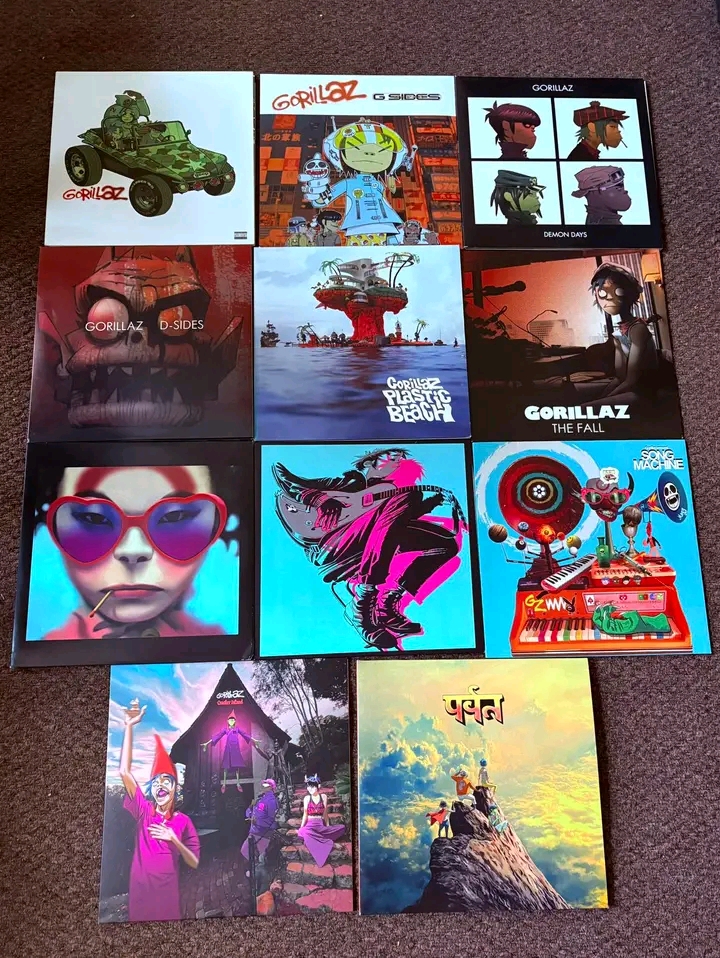
it became a personal journey through sound, artwork, and the evolution of one of the most innovative acts in modern music.
It started with a single record: Demon Days. I remember placing the needle down for the first time and being drawn into its dark, cinematic world. The warmth of vinyl gave tracks like “Feel Good Inc.” a depth I hadn’t experienced digitally. That moment sparked something—this wasn’t just listening anymore, it was collecting, curating, and connecting with music in a more tangible way.
From there, the hunt began. Each album told a different story. Gorillaz (their self-titled debut) carried that raw, genre-blending energy, while Plastic Beach expanded into a lush, conceptual masterpiece. Tracking these down wasn’t always easy. Some records were out of print or only available in limited editions, turning simple purchases into small victories. Record shops, online marketplaces, and even unexpected finds became part of the process.
What made the journey even more compelling was the visual identity behind the music. Created by Jamie Hewlett and led musically by Damon Albarn, Gorillaz albums aren’t just records—they’re pieces of art. Holding a vinyl sleeve, studying its illustrations, and flipping through inserts added layers to the experience that streaming could never replicate.
There were moments of frustration, of course. Delayed shipments, overpriced listings, or discovering a rare pressing just seconds too late. But those setbacks made the eventual finds more rewarding. Completing the collection wasn’t a single moment—it was a gradual realization that every album, from Humanz to Song Machine, was finally sitting on my shelf.